Category Archives: Travel

Drinks of the Week: Bols cocktails

Never heard of Bols Genever? Neither had I until a four-hour stopover at Schiphol airport in Amsterdam. Bols is an Amsterdam-based liqueur maker that also makes its own version of gin, called genever. I gathered that Bols was kind of a big deal in town since the airport featured not only a bar lined with Bols products, but a cocktail kiosk dedicated to educating tourists.

Blake chooses a cocktail based on his taste preferences. Then, Antony shakes it up.

Blake and I stopped into the kiosk where virtual bartender Antony invited us to choose a cocktail based on our taste preferences. After picking a Holland House, he walked me through how to make one. I got thirsty despite the fact it was 9 a.m. (which explained the shocking number of people already in the bar). Then, I printed off the recipe and Antony instructed me to take it to the bar to get a 15 percent discount on the drink. Well, okay.

With his jaunty cap and suspenders, Antony embodies pre-prohibition happy hour. Who’s thirsty?

We sat right at the bar and showed our drink recipes to the real bartender. Unlike Antony, he hadn’t a clue how to make a BG3 or Holland House, and spent the next 15 minutes eyeing up the recipes and trying to find the dry vermouth. That was fine though because by the time we were served it was close to 11 a.m. and I felt it was okay to start drinking since it was almost noon in Tanzania.

Blake got the BG3 and liked it even though he’s not a gin fan. I loved my Holland House: tart, smooth and really the perfect drink to knock back at 3 a.m. Calgary time. Cheers!

Holland House

  • 1/4 oz Bols Maraschino
  • 1-1/2 oz Bols Genever
  • 3/4 oz dry vermouth
  • 1/2 oz fresh lemon juice

Shake all ingredients with ice and fine-strain into a coupette. Garnish with a lemon zest.

Look at the bottles behind the bar and you’ll see Bols.

BG3

  • 1-1/2 oz Bols Genever
  • 3/4 oz Bols Triple Sec
  • Bitter lemon
  • Lemon wedge

Build in a tall glass with ice. Top up with bitter lemon and garnish with a lemon wedge.

— Recipes courtesy Bols

Not unlike a Tom Collins: tall and refreshing.

I’m thankful for electricity, indoor plumbing and a smoke-free home

Thanksgiving is a time to reflect on all we’re thankful for — plentiful, nourishing food, good friends, family and — for some — football. This year I’m looking at the holiday from a slightly different perspective and will add some items to my grateful list: a furnace, shoes, pillow-top mattress, windows and indoor plumbing.

These are first-world luxuries that are so commonplace, we rarely give them a thought. But after visiting a Masai village in Tanzania I believe they make a huge difference to everyday comfort. For me, anyway.

Masai kids strike a pose.

Ololosokwan is a village in the Serengeti, a 30-minute drive on a dirt road from andBeyond Klein’s Camp, the luxury safari lodge where we were staying. Tourists can pay $50 per jeep to tour through the village and learn a bit more about life in one of Africa’s best-known tribes.

The traditional Masai diet of meat, milk and cow’s blood has now expanded to include greens.

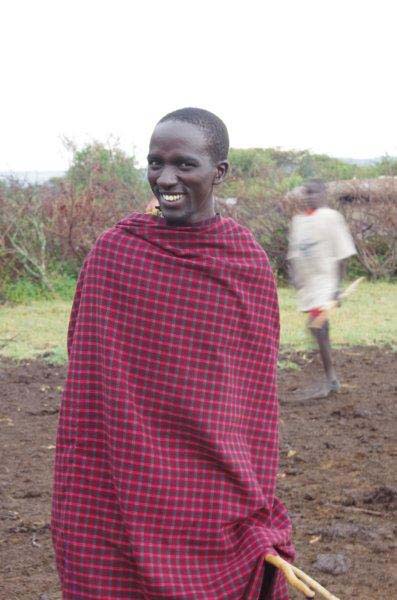
Before visiting the village I had preconceived ideas about the Masai from images I’d seen in documentaries and on one of last year’s episodes of The Amazing Race. The men wear bright red blankets draped over their shoulders and spend their days herding cattle and goats, and keeping the livestock safe from threats such as lions thanks to a sharp spear. Not so long ago they ate a diet of meat, milk and cow’s blood, but have now added vegetables such as cabbage for extra nutrients. With the exception of tourists who visit and bring money, and the western clothes trickling in, life as they know it isn’t much different from 100 years ago.

Red patterned blankets are a Masai style staple.

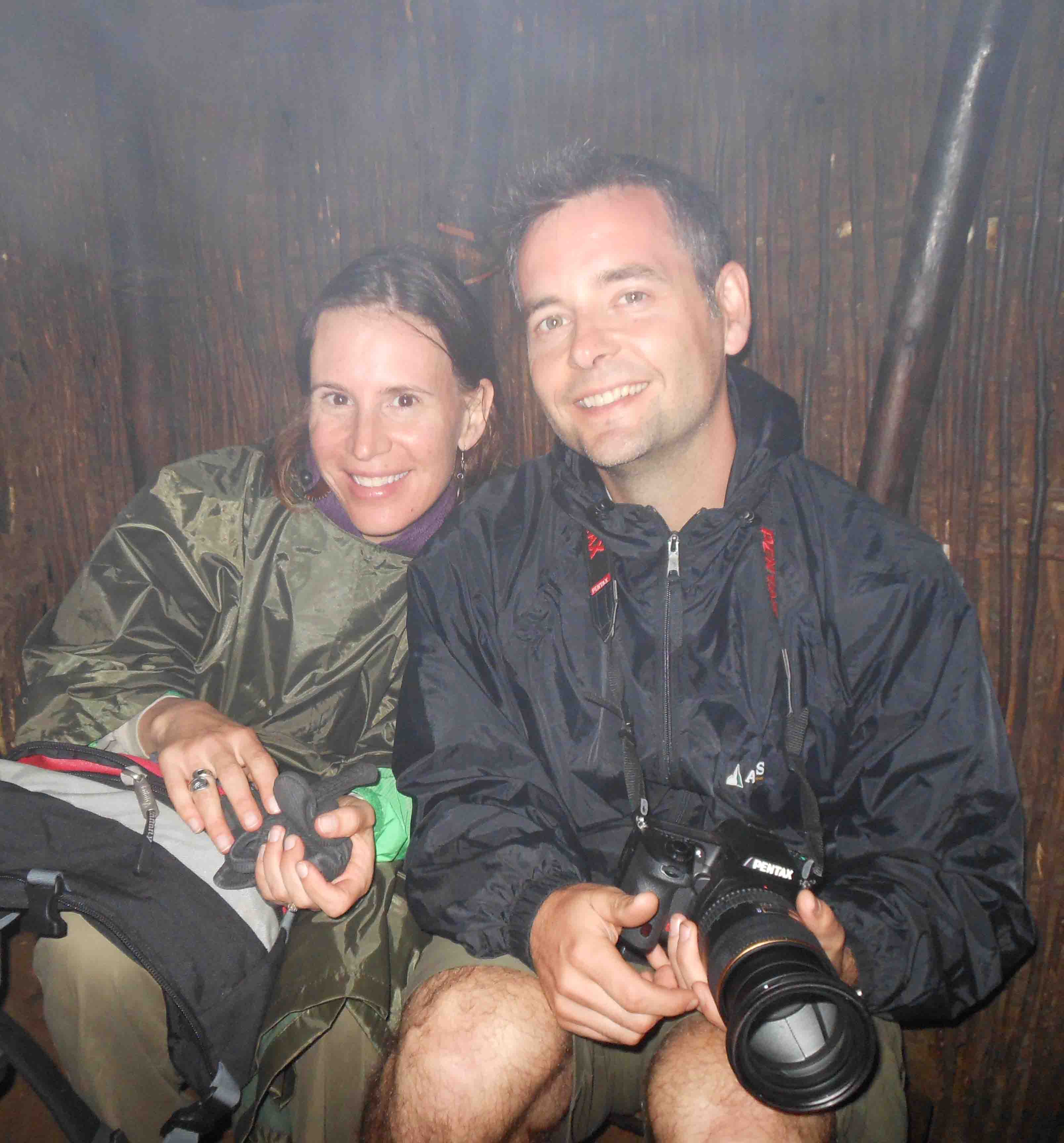
It’s one thing to see the Masai on TV, but quite another view to visit a village in person. The Masai live in huts made of mud and cow dung. The huts are heated by a fire that doubles as a cooking area. On either side of the small kitchen is a cramped sleeping area — one for the mother and girl children, another for the father and boys. The ceilings are low to trap heat and there aren’t any windows or ventilation of any kind that I could see. It was all I could do to squint through the heavy smoke in the dim light to take in the spare surroundings: dirt floor, no electricity, no plumbing, no furniture beyond a couple of squat wooden benches. The smoke was really the limiting factor, I felt — it burned my eyes in a way that made the Grizzly House in Banff seem airy and refreshing.

Smiling through the smoke.

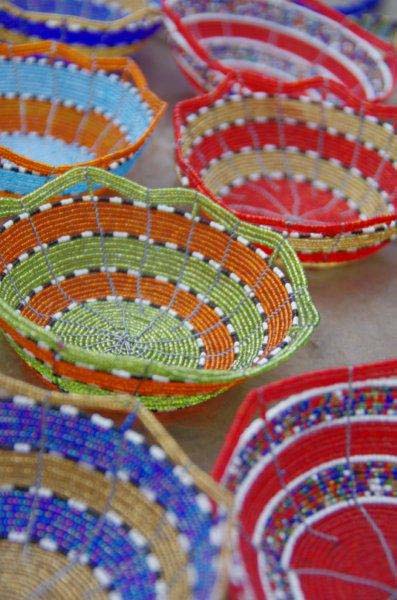
I’ve stayed overnight with a hill tribe in northern Thailand, slept at modest guest houses run by Nepalese families in the Himalayas, and I had just spent seven nights in a tent while climbing Kilimanjaro. But this home felt primitive beyond compare. I’m sheepish to admit I had a “Holy crap I can’t believe people live like this!” moment, immediately followed by a “How long do we have to stay in here asking questions? I think I’m going blind from the smoke,” thought. I pitied my poor, safari-spoiled western self in the village surroundings, but not the villagers themselves — they were way too well-adjusted and cheerful. Children walked barefoot through mud and cow dung to greet us with smiles. Men and women proudly showed off the livestock. And of course they were keen to sell us some beautiful beaded bracelets or bowls.

The beaded bowls were sold at a significant mark-up, but at least the money went directly to the village.

For them, life is life. They have food, shelter and family. I’m the one who had a hard time reconciling their privations with the comparatively opulent safari lodge we returned to after our visit, where a candlelight dinner of lamb curry, carmelized beets and mixed vegetables awaited, followed by a Pimm’s Cup nightcap in the lodge bar. It was a little Bizarro-World.

Still, I’m hugging my kids a little harder this Thanksgiving. I’m thankful they have a varied diet, shoes and flush toilets, and especially that I don’t have to share a twin mattress on the floor with them.

Drink of the Week: Gin Fizz

When in Africa, drink gin. Many countries on the continent, such as Tanzania, were settled by Great Britain. If there’s one thing the Brits successfully exported to the world — beyond lace doilies and racy photos of Prince Harry — it’s gin.

Back in the day the colonial set usually drank their gin with tonic, which contains quinine (an anti-malarial), but gin has become so commonplace in Africa you’ll find many other gin cocktails, such as a Gin Fizz.

The Serengeti and a refreshing Gin Fizz beckon.

I tried this drink one afternoon before an evening game drive at andBeyond Klein’s Camp, a luxuriously rustic safari lodge situated on a private land concession adjacent to Serengeti National Park. At 4 p.m. tourists are supposed to take a page from the Queen and sip tea, but I asked for something a little stronger.

A Gin Fizz is basically a Tom Collins with less simple syrup and different garnishes. Its main attribute is its ability to refresh while simultaneously delivering a lot of gin in a nice format: tart, slightly sweet and, well, fizzy. It also calms your nerves if you’re a little jumpy about coming within 10 feet of a bunch of lions in an open-air safari jeep. Enjoy!

Totally calm thanks to the Gin Fizz.

Gin Fizz

  •  2 oz Gordon’s London Dry Gin
  • 1/2 oz sugar syrup (use the British ratio of two parts sugar to one part water)
  • 1 oz fresh-squeezed lemon juice
  • Top soda water
  • Ice
  • Lime (or lemon) wedge garnish

Shake the gin, lemon juice and sugar syrup with ice, then strain into an ice-filled Collins glass. Top with soda water and garnish with a lemon (or lime) wedge.

— Recipe courtesy andBeyond Klein’s Camp