Category Archives: Parenting

“Zero googly eye”

What were you scared of when you were little? For me it was the “upside-down tree,” a pine tree outside my bedroom window that had been struck by lightning, making its top look like a tree trunk. For whatever reason, it freaked me out, and I avoided looking out the window at bedtime for fear it would sense my unease, crash through the glass, and use its trunk limbs to pry me from bed. Irrational? Yes. Normal? To a degree.

No, this isn't the upside-down tree from my youth, but it gives you the idea. Creepy, right?

This isn’t the upside-down tree from my youth, but it’s close. Creepy, right?

At some stage most children will have what adults would call an irrational fear. Preschoolers worry there’s a monster in the closet; older children might harbour anxiety about a burglar breaking in. At age four, Avery was scared of the dark to the point of sleeping with her light on every night. I started spritzing her room with “monster spray” before bed while we chanted a mantra that went something like, “Good night, sleep tight, and keep away monsters, spiders, vampires, robots, ogres, dinosaurs and ghosts.” After months of misting her room with nothing more than water, she finally grew out of it.

Evidently it's a real thing.

Evidently monster spray is a real thing.

With Bennett, it’s a bit more challenging. The things that freak him out aren’t zombies or werewolves or Shrek. They’re things that you actually encounter in real life. Two years ago he was terrified of fireplaces. Not gas ones, mind you — real wood-burning fires. During a trip to the Jasper Park Lodge we couldn’t enjoy a cocktail at the Emerald Lounge because of its giant roaring fire. Nope, Bennett wouldn’t set foot in what I consider Alberta’s most welcoming mountain lounge. Then he was scared of diving boards. This made visits to the Talisman Centre problematic as we often had to walk past the dive tank during dive practice to get to the daycare centre (I would carry him while he looked away and moaned).

He’s also scared of our neighbour’s sharpei, as well as the hippos, gorillas and lions at the Calgary Zoo. One time he heard a hippo “roar” in the African Savannah and ran right out of the building forcing Grammie (my mom) to chase him down. Another time I joked with him in the TransAlta Rainforest about seeing a lion in there amongst the apes, forgetting that humour of this kind is lost on a black-and-white autistic thinker. Now, he won’t set foot in either building.

But all of these fears pale in comparison to his ongoing obsessive anxiety over the Googly Eye. Let me explain. Last year in Arizona we visited the Arizona Science Center in Phoenix. In the foyer stood a telescope. Naturally, Avery went over and looked into the eyepiece, not realizing that it was set up to broadcast a magnified image of her eye high up on the science centre wall. So… the first thing Bennett saw when he walked in was a giant green “googly eye” staring at him from above. He turned right around and hightailed it outta there, a stricken look of pure panic on his face.
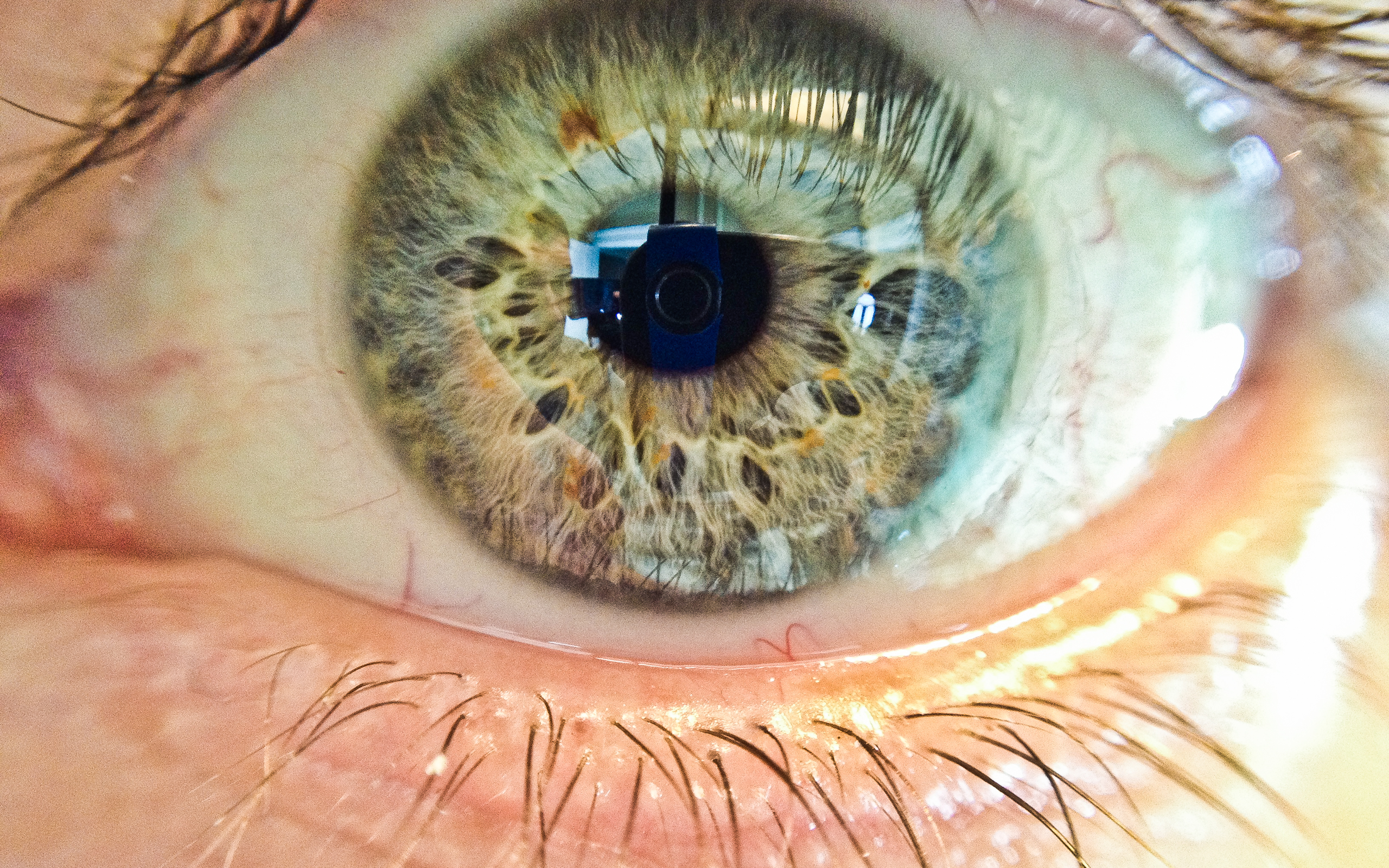
Avery's all-seeing green "googly eye."

Avery’s all-seeing green “googly eye.”

When Blake caught up to Bennett and asked him what was wrong he said, between sobs, “I saw a GOOGLY EYE! It scared me!” Blake somehow managed to calm him down and talk him into going back into the building. He carried Bennett past the telescope (while he looked away and moaned). For the rest of the trip all Bennett talked about was the googly eye at the science centre. Forget the jeep ride in Sedona and the horseback riding at the dude ranch — his fear of the googly eye was the trip highlight.

Unfortunately, being a black-and-white autistic thinker, Bennett assumed that since the Arizona Science Centre had a googly eye, every science centre IN THE WORLD must surely also have a googly eye, including Telus Spark in Calgary. So imagine his distress when I told him his grade one class was going on a field trip to the science centre.

Bennett: “There’s a googly eye there?”

Me: “No, there’s no googly eye at the Calgary science centre. Just in Arizona.”

Bennett: “I’m worried about the science centre.”

Me: “You don’t have to worry. There’s no googly eye.”

Bennett: “There’s a googly eye there?”

Me: “No. There’s no googly eye. There’s zero googly eye.”

Bennett: “There’s a zero googly eye there?”

Me: “No. Zero means no. No googly eye. Zero googly eye.”

And so it went with me trying to explain the concept of zero while convincing my son that it was safe to go to Telus Spark. This went on for days leading up to the big field trip. Cue screaming into pillow (me).

I also informed his teacher about his anxiety, so she could talk to the class about what they would be seeing and doing at the science centre. At home, I showed him pictures from inside Telus Spark and pointed out that there wasn’t a googly eye ANYWHERE. I also offered to volunteer on field trip day, just in case Bennett refused to go in or we needed to make a quick exit (in case the googly eye telescope was on loan from Phoenix. You never know!).

Yes, it was a lot of work to prepare Bennett for the science centre. But guess what? It paid off. There was “zero googly eye” there and, after he relaxed (he spent the first 30 minutes on googly eye alert), he had a great time.
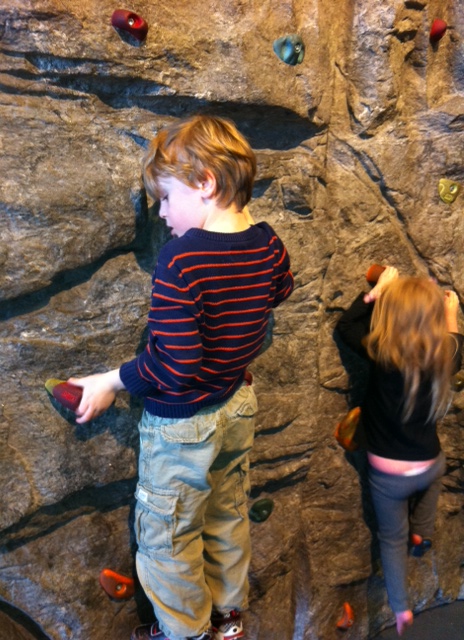
Bennett tries the climbing wall at Telus Spark.

Bennett tries the climbing wall at Telus Spark.
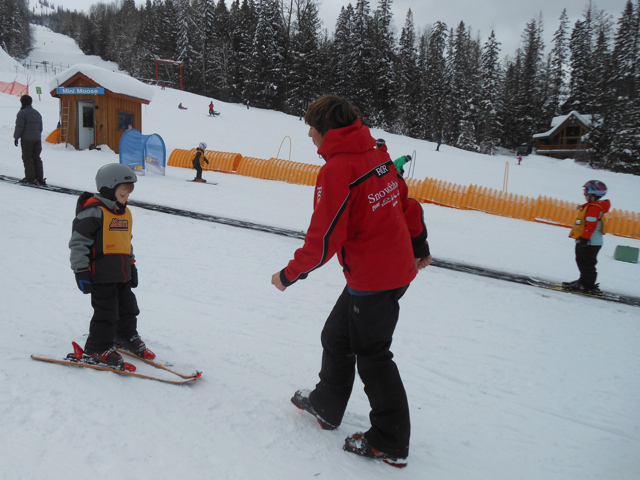
The boy can ski

You’d think my best memory of Family Day weekend would be the epic Fernie powder. Nope — it was watching Bennett finally link turns as he skied down Meadow, a green run off Deer Chair, following behind Blake with a huge smile on his face. It’s official: the boy can ski.

Bennett is excited and proud to be skiing!

Bennett is excited and proud to be skiing! Photo by Kevin Turner, taken at Fernie.

It’s been a long and slippery road getting Bennett on sticks. We began the journey two years ago, by making him put on ski boots and ride the magic carpet. We knew then that we couldn’t rush him into it; that he had neither the strength nor the co-ordination to master the snow plow wedge, or to steer himself, so we bided our time.

Look ma, no hands!

Bennett rides the Mini Moose at Fernie in 2012.

Last season we enrolled him in two private lessons at Canada Olympic Park, followed by a ski-and-play lesson at Fernie, for a learn-to-ski series I was writing for Snowseekers.ca. He learned about pizzas and French fries, and seemed to enjoy skiing, but he had no focus. After lessons when I tried to ski with him he gazed off in every direction but straight ahead, oblivious to my calls of, “Pizza! Pizza! Bennett, stop!” What’s more, after a couple trips up the magic carpet he would declare, “All done with skiing!”

The snow plow is painful enough with skis -- let's please not do it while parenting.

“Hmmm, what’s that on the ground?” Bennett wonders, looking every which way but straight ahead in 2013.

When your child had a disability it can take a long time for him to learn something that other children master in a day or a week or — as is the case with skiing — a season. Knowing it could take a long time, but committed to the idea of our family being able to ski together one day, we persevered. This year we enrolled Bennett in the Canadian Association for Disabled Skiing (CADS) program that runs over eight weeks at COP and that I wrote about for the Calgary Herald.

For the past six weeks his volunteer instructors have been getting him out, attaching a ski bra (a.k.a. edge-wedgie, which holds his ski tips together and makes it a lot easier for him to make a snow plow) to his skis’ tips and having him do laps on the magic carpet. After each lesson they would report that he was just going straight down with no pizzas, or he wasn’t into it, or he was too cold. When I snuck out to observe him he was in Lala Land, chewing on his mitten and not paying any attention. “What’s the point of this?” I was beginning to wonder. I felt like I was feeding my dream instead of attending to Bennett’s wishes (namely, to warm up and eat potato chips in the lodge).

COP ski lessons with CADS Calgary.

COP ski lessons with CADS Calgary.

But then in Fernie last weekend it all seemed to click. Instead of me skiing backwards down the hill facing Bennett, I turned around and told him to follow me down Elk from the top of the Mighty Moose poma… and he did. I told him to turn when I turned (and I yelled, “Turn!” every time I turned)… and he did. I told him, “Okay, we’re going to ski through those four coloured arches,”… and he followed me through them. He even stopped when I said, “Stop!” without running into me. (He still needs an edgie-wedgie, but I’m okay with that.)

So when Blake suggested we take him up the Deer Chair, I thought, “Why not?” With both of us there we could surely intercept him should he go careening out of control toward the trees, another skier or a chairlift tower. But here’s the thing: he maintained a controlled wedge while following behind Blake. He linked his turns. He stayed focused — it was as though needed a longer, more challenging run to stay on task. He even managed quite a long traverse across the slope back to the base. And the best part? Bennett smiled the whole time. Instead of declaring he was “all done,” he wanted to go up Deer Chair again (in itself an exciting journey) and again and again. Forget that powder waiting up in Currie Bowl — I’d rather ski Deer Trail with Bennett.

Life according to the schedule

When I was a teenager and into early adulthood I was a maker of lists. Grocery lists for the store, homework priority lists, bulleted resolutions every New Years Day, and even “Lists of Men” in university (guys I thought were hot, in order of their hotness). Making lists made me feel on top of things and in control during a fairly chaotic time in my life: the transition from child to independent adult.

Now that I’m a grown-up I make far fewer lists. I still write down daily work-related tasks like interviews and blocks of time for writing, and about once a month I put effort into the Superstore list, but for the most part, life is so predictable I know what’s coming next and what chores I need to complete so there’s no need to write it all down.

The irony is that just as I have become liberated from schedules, Bennett has become a slave to them. We are now the owners of three sets of visual schedules that help our autistic son do everything from choose an activity during free play, to put his pyjamas on at bedtime.

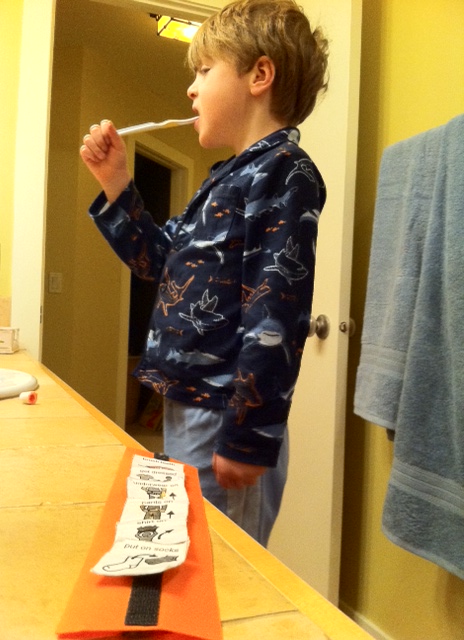
The orange strip shows the get-dressed task in order from first (go upstairs) to last (put on socks). Breaking "get dressed" into four separate tasks (underpants, pants, shirt, socks) helps Bennett remember every item and the order they go on.

The orange strip shows the get-dressed task in order from first (go upstairs) to last (put on socks). Breaking “get dressed” into four separate tasks (underpants, pants, shirt, socks) helps Bennett remember every item and the order they go on.

Many kids and adults with autism benefit from visual schedules. These are binders filled with little pictures of things my son might do during the course of the day. The idea is to plot tasks out for him visually on a velcro strip so there won’t be any surprises and to ease transitions between activities. Since he can’t yet read, pictures work best.

The idea of the visual schedule was introduced last year when Bennett was in the Specialized Autism Services program through Renfrew, his school. His aides used an activity schedule to direct his play and get him doing things related to the speech, fine motor, gross motor and behaviour goals in his Individual Program Plan. The teachers at his school also use them in the classroom. You can’t just tell Bennett, “Now we’re going to do a craft,” because he’ll say, “No, I don’t want to.” But if you show him a schedule with the craft icon, he’ll do it. The schedule was like gospel.

Bennett brushes his teeth on cure from the schedule.

Bennett brushes his teeth on cue from the schedule.

I started using one in the mornings for getting dressed, and in the evenings for bedtime, to motivate him to brush his teeth, put on his pants, etc., without having to constantly nag him. With the schedule to refer to, he knew what was expected of him.

Happy, happy, joy, joy, right? Well, kind of, sort of, not really. Life under the rule of Bennett’s schedule is constricting. The older he gets, the more he gets set in his ways. We are now at the mercy of, and rely on, the schedules. They really are like gospel in that if we don’t follow them, behaviour hell breaks loose.

For example, Bennett is currently obsessed with the cartoon Super Why. In the fall he got in the habit of watching Super Why once in the morning and again before dinner. The problem was he would watch only the same two episodes over and over again. I could suggest different episodes, but no. Following the advice of his school psychologist I finally resorted to creating a Super Why schedule. I printed off images that represent every episode of Super Why and I cut them out into little schedule squares. Now, I give him two different Super Why choices to choose between. The strategy worked to get him watching different episodes, but I fear he’ll be watching Super Why FOREVER (case in point: he wants to go as Whyatt from Super Why for Halloween, a holiday that’s eight months away!). If there’s no Super Why, if for some ungodly reason Netflix is NOT WORKING, Bennett turns into Linda Blair from The Exorcist.

Yes, we now have a schedule exclusively for Super Why.

Yes, we now have a schedule exclusively for Super Why.

Other routines he’s stuck in (but that we don’t have a visual schedule for) include: eating cheesy eggs for breakfast every Saturday morning, watching Joseph and the Amazing Technicolor Dreamcoat every Saturday afternoon, and playing hide-and-seek every night after dinner. He starts planning the weekend on Thursday, trying to get me to commit to cheesy eggs and Joseph well in advance. It limits our ability to be spontaneous (pancakes for breakfast? Forget it!). It’s also exhausting. I would love to be able to tell him to go get dressed and have him run off and do what he’s told, just like that. (The one saving grace is when we travel we leave the schedules at home — outside of the ordinary, his need for routine lessens considerably.)

But for Bennett at home, these routines and rituals are a life-saver. I can’t imagine what it must be like to be inside his brain. I think that to him, the world must be a confusing, overwhelming place filled with words, body language and nuance he just doesn’t understand. I sometimes think that when I open my mouth and tell him a bunch of stuff all at once, he hears the woman from the Charlie Brown telephone, “Wha-wha-wha-wha-wha-wha…” So those simple pictures on a velcro strip translate the hieroglyphics of the spoken word into commands he can understand. Like my adolescent and young adult lists, Bennett’s visual schedules bring order to his world.